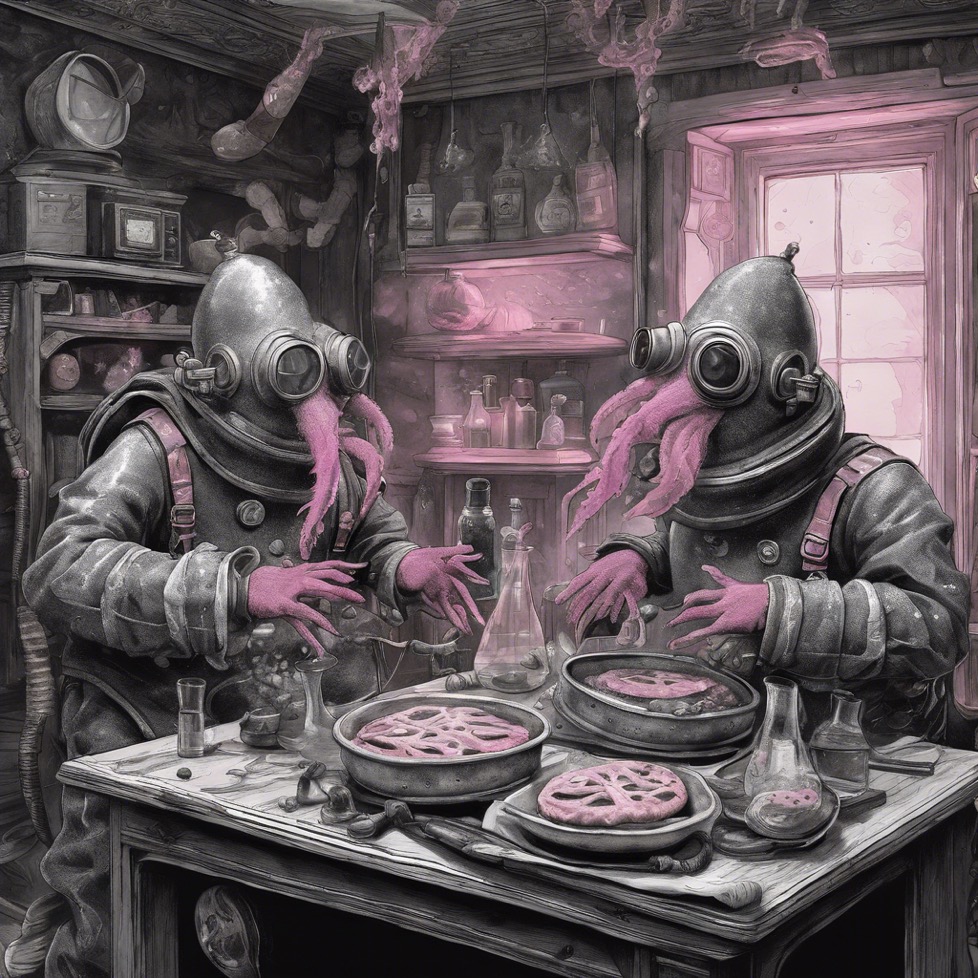
This document presents a comprehensive exploration of Bubble Theory, a fictional yet scientifically inspired framework examining the interactions of aquatic entities from a distant galaxy. Utilizing principles of quantum gravity, the dynamics of vibrations, and the essence of literature and music, this narrative investigates the synthesis of sensory experiences and the ancient mysticism that enriches their existence.
1. Introduction
The exploration of quantum gravity within a multi-dimensional framework provides insights into the mechanics of these Aquatic Probes. This study aims to elucidate the synthesis of vibrations and frequencies that characterize their existence and interactions beneath the ocean’s surface.
2. Theoretical Framework
2.1 Bubble Theory
Bubble Theory posits that the fabric of space-time, as described by the theory of relativity, exists within a continuum of bubbles. Each bubble represents a unique dimension of reality, allowing for the coexistence of various forms of existence. The Aquatic Probes operate within these bubbles, utilizing quantum gravitational mechanics to navigate through space-time.
2.2 Quantum Gravity
Quantum gravity serves as the cornerstone of understanding the interactions between the Aquatic Probes and their environment. By manipulating gravitational forces at the quantum level, these entities can exceed the speed of light upon entering water, creating a localized distortion in space-time that facilitates their movements.
3. Underwater Environment
3.1 Acoustic Vibrations
The underwater realm is rich with acoustic vibrations that play a crucial role in the communication and navigation of the Aquatic Probes. Utilizing advanced auditory technologies, these entities can interpret a spectrum of sounds, from the low-frequency hum of tectonic movements to the high-pitched calls of aquatic life.
3.2 Visual Spectrum Interaction
The visual capabilities of the Aquatic Probes extend beyond the humanly perceivable spectrum. They are equipped with sensory apparatuses that perceive ultraviolet and infrared wavelengths, allowing them to interact with bioluminescent organisms and other entities that emit light within the aquatic environment.
4. Coexistence with Aquatic Life
4.1 Symbiosis and Mutualism
The Aquatic Probes engage in a symbiotic relationship with the native aquatic life forms. By harmonizing their vibrations with those of the surrounding organisms, they create a mutualistic environment where energy and information flow freely, sustaining both life forms.
4.2 Observational Studies
Extensive observational studies reveal that the Aquatic Probes actively participate in the vibrational synthesis of their environment. They emit low-frequency waves that resonate with the frequencies of various marine species, resulting in a unique auditory tapestry that influences the behavior and well-being of the aquatic inhabitants.
5. Conclusion
The study of these Aquatic Probes reveals a complex interplay of quantum mechanics, vibrational synthesis, and ecological harmony. Their ability to navigate and coexist within the aquatic domain underscores the potential for understanding multi-dimensional existence and the profound connections that transcend conventional forms of life.
6. Future Research Directions
6.1 Exploration of Other Aquatic Realms
Future research will focus on the exploration of other aquatic realms to identify additional entities and their interactions with diverse ecosystems. The implications of Bubble Theory on interdimensional travel and existence will also be a significant area of investigation.
6.2 Advances in Quantum Technology
Advancements in quantum technology will enhance our understanding of the mechanisms employed by the Aquatic Probes, potentially leading to innovations in energy generation and sustainable living practices on Earth.